Can Your Husband Stay at a Confinement Centre?
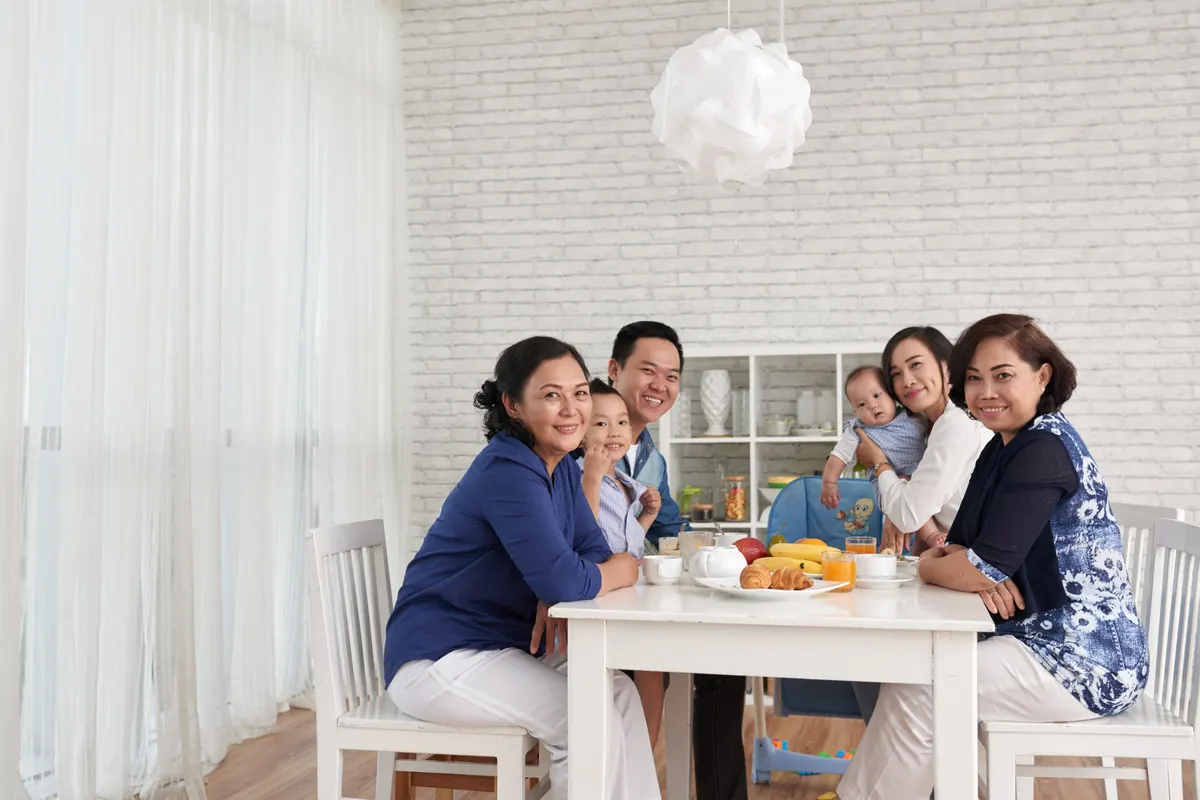
Short answer: yes, at most Singapore confinement centres your husband can stay — but "stay" usually means something specific. Daytime visiting is close to unrestricted. An overnight stay normally needs an extra bed, comes with a fee, and depends on the room you book. Policies differ enough between centres that you should confirm this before you sign, not after.
If your husband being there at night is something your family has assumed rather than checked, this guide covers what the policies actually say, what they cost, and the five questions worth asking every centre on your shortlist.
What "husband can stay" actually means
Most centres split this into two different things, and the distinction matters more than it first appears.
Visiting during set daytime hours is close to standard across the market. It is rarely restricted beyond basic hygiene rules around the nursery, and no centre worth considering will make this difficult.
Staying overnight is a separate matter, and it is where policies genuinely differ. Some centres bundle a partner-stay option into a family suite. Others treat it as an add-on you have to request and pay for. A few, usually those working with shared or twin rooms, do not offer it at all.
Meals for him are almost always billed separately, whether or not he stays over. None of this is reliably spelled out on a centre's website, which is exactly why it belongs on your shortlist call rather than in the list of things you assume.
Does the room type change what's possible?
Space usually decides more than policy does. A centre can be entirely willing to let your husband stay and still have nowhere to put him.
| Room type | Typical space | Overnight stay for husband |
|---|---|---|
| Shared or twin room | Smallest option, sometimes room-shared with another mother | Rarely possible — little to no spare space |
| Standard single room (around 30 sqm) | One bed for mother, a cot for baby | Sometimes, usually with a fold-out or extra bed at a fee |
| Family suite or upgraded room | Larger, occasionally a separate sitting area | Usually the room type built for it, at a higher package price |
A standard room of roughly 30 square metres is about the size of a hotel room. That is comfortable for a mother and a cot, and tight once you add a second adult and a fold-out bed for a month. If your husband staying is non-negotiable, the room type is the thing to negotiate on, not the policy.
The five questions to ask before you book
If having your husband there overnight matters to your family, work through these with each centre before you sign anything.
- Can my husband stay overnight, and is there an extra charge for it?
- How many nights are included in the package, and can we add more?
- Does the room need an upgrade, or is a fold-out bed already an option?
- Are there restrictions in the first few days after birth, when nursing routines are heaviest?
- What are the visiting hours and nursery access rules that apply to him?
Our directory of confinement centres in Singapore lists providers across every region, so you can shortlist a few and put these same five questions to each one before deciding.
How this compares with a confinement nanny at home
With a confinement nanny placed through an agency, this question mostly disappears. Your husband is already there by default — no separate policy, no extra bed fee, no visiting hours to work around.
What you take on instead is managing your own space, your own schedule, and a nanny living in your home for the month rather than trained staff running a facility. That is a real trade, not a free upgrade.
Neither option is better across the board. A centre suits families who want structured, round-the-clock nursing support and are comfortable with facility rules. A nanny suits families who value having everyone under one roof without needing to ask permission for it. If you are still weighing the two, our honest comparison of centres, nannies and DIY sets out the full cost and lifestyle differences.
What about older children, parents or other visitors?
Most centres are stricter here than they are about a husband staying.
Older children can usually visit during set hours in a common lounge, but overnight stays are typically reserved for the mother, the baby, and sometimes one partner. This is partly space and partly infection control around a shared newborn nursery — a policy that exists for good reason even when it is inconvenient. Parents and in-laws are generally welcome to visit, not to stay.
This can be a bigger adjustment than expected for families used to a wider circle of hands-on support at home, particularly where extended family involvement is the norm rather than the exception.

Does this differ across Chinese, Malay and Indian practice?
Confinement length and who is traditionally expected to help both vary by community. HealthHub notes that Chinese families traditionally observe around 30 days, Malay families around 44 days, and Indian families around 40 days.
None of this dictates whether a husband should be present overnight at a centre. It shapes the wider expectations a family brings into the decision.
| Community | Traditional length | Typical role of the husband |
|---|---|---|
| Chinese | Around 30 days | Caregiving traditionally led by the mother or mother-in-law, though the husband's role in modern practice has grown, often centred on support rather than hands-on caregiving |
| Malay | Around 44 days | Family and community support tend to be strong, and the husband is traditionally expected to be present and attentive, not just a visitor |
| Indian | Around 40 days | Extended family, especially the mother or mother-in-law, has traditionally carried much of the caregiving, with the husband's involvement varying by family |
There is no single right answer here. What matters is what works for your family, whichever centre or setup you eventually choose. Our guide to how long the confinement period lasts covers these traditions in more depth.
What the room policy alone doesn't tell you
A centre allowing overnight stays is not the same as a centre that suits your family.
The extra bed fee is not always disclosed upfront, so ask for it in writing. Overnight guest policies can also tighten during a centre's busiest periods, so a verbal yes on a facility tour is worth confirming again closer to your stay. And a generous visiting policy tells you nothing about staffing ratios, care quality, or how a centre handles a difficult night at 3am.
If husband-stay policy is the deciding factor for you, weigh it against everything else in the package, starting with the base cost. Our confinement cost guide sets out the typical range for standard, premium and luxury packages, so an extra bed fee has some context to sit in.
The bottom line

Most centres will let your husband stay in some form. The details, the cost, and the room needed to make it comfortable vary enough that you should never assume — and the answer you get on a tour is worth getting in writing before you pay a deposit.
Ask the five questions above of every centre on your shortlist. If you are weighing a few options, our side-by-side comparison tool lets you shortlist up to three centres and send one enquiry to all of them, so you can ask about overnight stays once and compare the answers directly.
Frequently asked questions
Can my husband stay every night for the full 28 days?
Some centres allow this, usually at a cost and often only in a family suite. Others cap the number of overnight stays, or offer it only for part of your stay. Confirm the exact terms in writing before you sign, as policies vary considerably between centres.
Does the centre charge extra for my husband to stay overnight?
Usually, yes. An extra bed, an upgraded room, or his meals are commonly billed separately from the base package. Ask for the exact add-on cost in writing before you book, not on the day you check in.
Can my other children stay overnight too?
Rarely. Most centres allow older children to visit during set hours but reserve overnight stays for the mother, the baby, and sometimes one partner — partly for space and partly for infection control around the newborn nursery.
What if the centre I like doesn't allow overnight stays at all?
Some centres genuinely don't. If having your husband there every night matters more than anything else, a confinement nanny at home, or a DIY confinement built around family support, may suit your family better than a centre.
Can my husband visit during the day?
Almost always, yes. Daytime visiting during set hours is close to standard across Singapore centres and is rarely restricted beyond basic hygiene rules around the nursery. It is the overnight stay, not the visit, where policies genuinely differ.
Ask three centres the same question at once
Shortlist up to three confinement centres and send one enquiry to all of them, so you can compare overnight-stay policies and costs side by side.
Compare centres